
Executive AI Governance, Cybersecurity & Technology Risk Advisory
Pezago Advisory helps business and technology leaders assess AI readiness, identify cybersecurity and technology risks, strengthen governance, and make informed decisions before exposure becomes a business problem.
Through focused executive reviews, independent assessments, and strategic advisory services, we provide practical findings and prioritized recommendations aligned with each organization’s operations, risk profile, and business objectives.
Let’s sit down, look at where you stand today, and build a clear path forward.
Confidential • No obligation
FREE AI Readiness & Risk Assessment
Artificial intelligence is creating new opportunities for organizations—but it is also introducing governance, cybersecurity, operational, and risk-management challenges that many leaders are not prepared to address.
This complimentary 15-minute assessment provides an executive‑level view of your organization’s:
• AI readiness and adoption maturity
• Governance and oversight practices
• Cybersecurity and data-protection exposure
• Operational and workforce preparedness
• Opportunities for responsible AI adoption
You will gain a clearer understanding of where your organization is prepared, where gaps may exist, and which areas require leadership attention before AI adoption expands.
Download your FREE AI Readiness & Risk Assessment and take the first step toward responsible, secure, and future‑proof AI adoption.
industries we serve
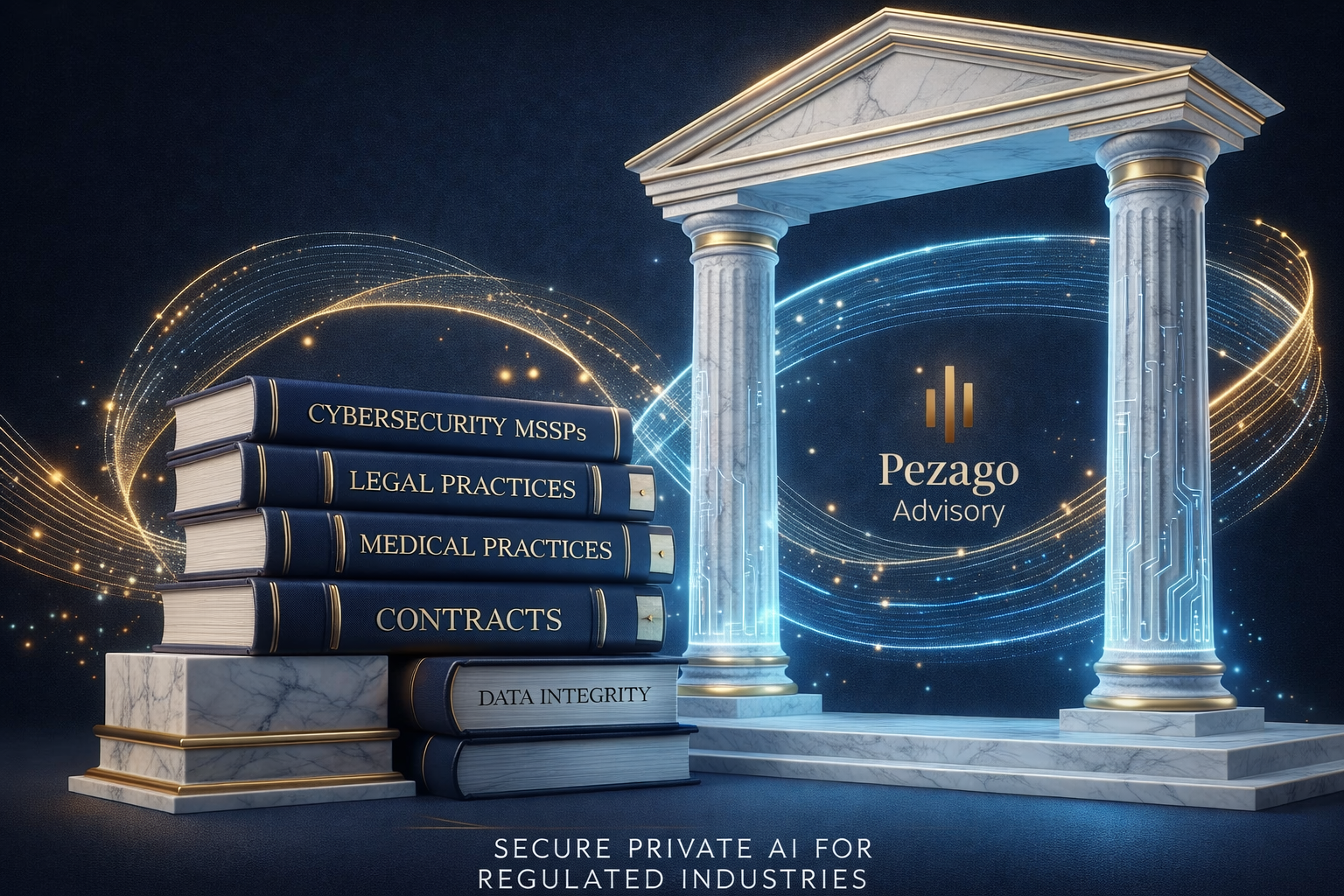
Pezago Advisory supports organizations where confidentiality, regulatory responsibility, operational resilience, and client trust are essential. We also support other professional-service, regulated, and high-trust organizations facing complex AI, cybersecurity, governance, and technology-risk decisions.
Legal Practices
We help law firms assess AI readiness, cybersecurity risk, governance requirements, and the potential exposure of confidential client information.
Our independent guidance supports informed technology decisions while protecting professional obligations and client trust.
Medical Practices
We help medical practices and healthcare organizations evaluate AI readiness, cybersecurity exposure, privacy concerns, governance responsibilities, and operational risk before adopting or expanding AI-enabled technologies.
Accounting & Certified Public Accountant (CPA) Firms
We help accounting and CPA firms evaluate AI adoption, cybersecurity risks, data-protection concerns, governance gaps, and operational opportunities.
Our assessments provide leadership with practical findings and prioritized recommendations before new technology is implemented or expanded.
The Problem
AI Is Powerful—But Most Firms Are Implementing It Unsafely or Ineffectively
For law firms, medical practices, and accounting and CPA firms, the challenge is not adopting AI—it is doing so without exposing sensitive data, weakening governance, or increasing operational risk.
Common roadblocks include:
Data security and compliance concerns
Unclear implementation strategy
Overcomplicated or experimental tools
Lack of internal technical resources
Risk of exposing sensitive client information
Solution
Independent AI, Cybersecurity & Technology Risk Advisory
Pezago Advisory helps leaders evaluate AI opportunities, identify cybersecurity and governance risks, and make informed decisions before adopting, expanding, or implementing AI-enabled technologies.
Our work focuses on:
Identifying opportunities to reduce manual and repetitive work.
Evaluating workflows that may benefit from responsible AI adoption.
Improving operational responsiveness and decision-making.
Protecting data integrity, confidentiality, and security from the outset.
Our assessment-first, vendor-neutral approach helps leadership determine what should move forward, what requires additional safeguards, and what may not be appropriate for the organization at this time.
About George V. Peterson
George advises founders, CEOs, and leadership teams on secure, responsible, and defensible AI adoption. An Army veteran with 17 years of service in the Texas Army National Guard, he brings mission-focused discipline to more than 27 years of cybersecurity leadership.
As the founder of Pezago Advisory, LLC, George architects secure, compliant, and scalable AI foundations for executive teams nationwide.
His expertise spans NIST CSF, HIPAA, and cybersecurity risk
management, ensuring AI innovation is anchored
in rigorous governance.
He focuses on driving business outcomes by designing practical security and AI programs that reduce risk while accelerating company growth. George brings a grounded, steady leadership style to complex technical challenges—an approach defined by the same integrity and accountability he applied throughout his military and professional career.

Education
B.B.A. in Information Systems – University of Texas at San Antonio (1995)
A.A.S. in Electronic Engineering Technology – National Education Center, National Institute of Technology (1986)
Professional AI Certifications (2026)
AI Consultant Certification – Industry Rockstar LLC
AI Data Specialist Certification – Industry Rockstar LLC
AI Implementor (Level 1) Certification – Industry Rockstar LLC
Generative AI Fundamentals – Databricks
Professional Affiliations
ISACA (Professional Member): Austin, Texas Chapter; Member since 2011.
Risk Management Framework: Applying over a decade of experience with the CRISC (Certified in Risk and Information Systems Control), demonstrating IT risk management expertise.
NIST Frameworks (CSF 2.0 & AI RMF)
Our Mission
Pezago Advisory’s mission is to help business and technology leaders adopt AI responsibly by strengthening governance, protecting sensitive information, reducing cybersecurity and operational risk, and guiding informed technology decisions.
We provide independent assessments, executive advisory, and practical recommendations that help organizations move forward with greater clarity, confidence, and control.
How It Works
A Simple, Structured Approach
1. Assess Readiness and Risk
We begin by understanding the organization’s current AI use, cybersecurity concerns, governance practices, business priorities, and operational environment.
2. Identify Gaps and Exposure
We evaluate leadership oversight, data protection, employee AI use, third-party risk, cybersecurity controls, and other areas that may create operational, regulatory, or business exposure.
3. Prioritize Leadership Actions
We translate the findings into clear priorities, practical recommendations, and a structured 30-, 60-, and 90-day action plan.
4. Guide Responsible Next Steps
We help leadership determine whether the organization should strengthen governance, address cybersecurity gaps, conduct a broader assessment, or move forward with responsible AI adoption.
Who This Is For
Built for Leaders Scaling Operations Without Increasing Risk
Exploring AI while protecting sensitive data, regulatory compliance, and client or patient confidentiality.
Seeking to reduce administrative and operational workload.
Looking to improve efficiency without unnecessarily increasing headcount.
Working to scale responsibly without introducing avoidable cybersecurity, governance, or operational risk.
Why Work With Pezago Advisory
Experienced Guidance for Responsible, Secure AI Adoption
More than 27 years of cybersecurity leadership, technology-risk, and regulated-industry experience.
Independent, vendor-neutral assessments focused on your organization’s needs, risks, and business priorities.
Executive-level guidance that translates complex AI and cybersecurity concerns into clear business decisions.
Practical findings and prioritized recommendations—not generic reports or unnecessary technology purchases.
A disciplined, assessment-first approach designed to strengthen governance, protect sensitive information, and reduce avoidable risk.
Our Service Suite
Fractional AI & Cyber Governance Advisory
Modern organizations are accelerating AI adoption, but few have the executive‑level leadership needed to ensure those initiatives remain secure, compliant, and defensible. Fractional advisory gives founders and CEOs access to senior expertise without the cost or commitment of a full‑time executive.
As a Fractional AI & Cyber Governance Advisor
I operate as part of your leadership team — providing strategic direction, governance alignment, and risk‑anchored decision support that keeps innovation moving forward responsibly.
Executive‑Level Leadership
You gain the strategic clarity of a Chief Information Security Officer (CISO), AI lead, or governance executive — delivered flexibly and on‑demand. I help leadership teams make confident decisions about AI adoption, cybersecurity posture, and modernization.
Strategic Oversight
AI and cybersecurity decisions carry long‑term consequences. I provide structured oversight that ensures every initiative is grounded in operational reality, regulatory expectations, and enterprise risk.
Governance Alignment
AI must align with defensible governance. I ensure your AI roadmap, security controls, and decision processes stay synchronized with the National Institute of Standards and Technology Cybersecurity Framework (NIST CSF), HIPAA, and industry‑specific compliance frameworks.
Risk‑Anchored Decision Support
Leaders need clarity, not guesswork. I deliver actionable guidance that reduces uncertainty, strengthens accountability, and accelerates progress across AI and cybersecurity programs.
Ongoing Partnership Without Full‑Time Headcount
Fractional advisory gives you continuous access to senior expertise without hiring a full‑time executive. You receive leadership‑level support, strategic continuity, and governance discipline through a flexible, retainer‑based model.
AI Assessments
Architecture Before Automation. Security Before Scale. Don't build on sand. Most AI projects fail because the data is messy and the security is weak.
Pillar 1: AI Readiness Assessment (flagship):
A strategic evaluation of your business’s current AI maturity, capabilities, and constraints. You receive a clear roadmap outlining opportunities, risks, and actionable next steps for safe, effective adoption.
Pillar 2: Data Foundations Assessment:
A focused review of your data quality, structure, governance, and accessibility to determine whether your information environment can support reliable AI and automation. This assessment identifies gaps, risks, and required improvements.
Pillar 3: Implementation Pathway Assessment:
A practical evaluation of your systems, workflows, and operational processes to determine feasibility, integration pathways, and the safest way to deploy AI solutions within your existing environment.
Executive AI & Cybersecurity Risk Review
Gain greater clarity into your organization’s AI use, cybersecurity exposure, governance practices, and priority risks before they develop into larger operational, regulatory, or business concerns.
This focused executive advisory engagement is designed for leaders who need an experienced, independent perspective before expanding AI use, purchasing new technology, or committing to a broader assessment.
What You Receive
A 75–90 minute executive discovery session
Review of current AI use and known cybersecurity concerns
Review of governance, data protection, employee AI use, and third-party exposure
Identification of key leadership, control, and oversight gaps
A written Executive Risk & Priority Findings Report
Five to seven prioritized findings
Recommended 30-, 60-, and 90-day actions
A 60-minute executive findings presentation
One follow-up clarification session
Professional Investment
The Executive AI & Cybersecurity Risk Review is offered at a fixed professional fee of $2,495. The standard engagement includes one primary business entity, one executive discovery session, remote delivery, focused advisory analysis, a written findings report, and an executive findings presentation.
Organizations requiring multiple stakeholder interviews, extensive evidence or document review, technical testing, multi-entity analysis, or specialized regulatory evaluation will receive a separately scoped proposal.
The P.E.Z.A.G.O. Framework
A Structured Approach to Responsible AI Adoption
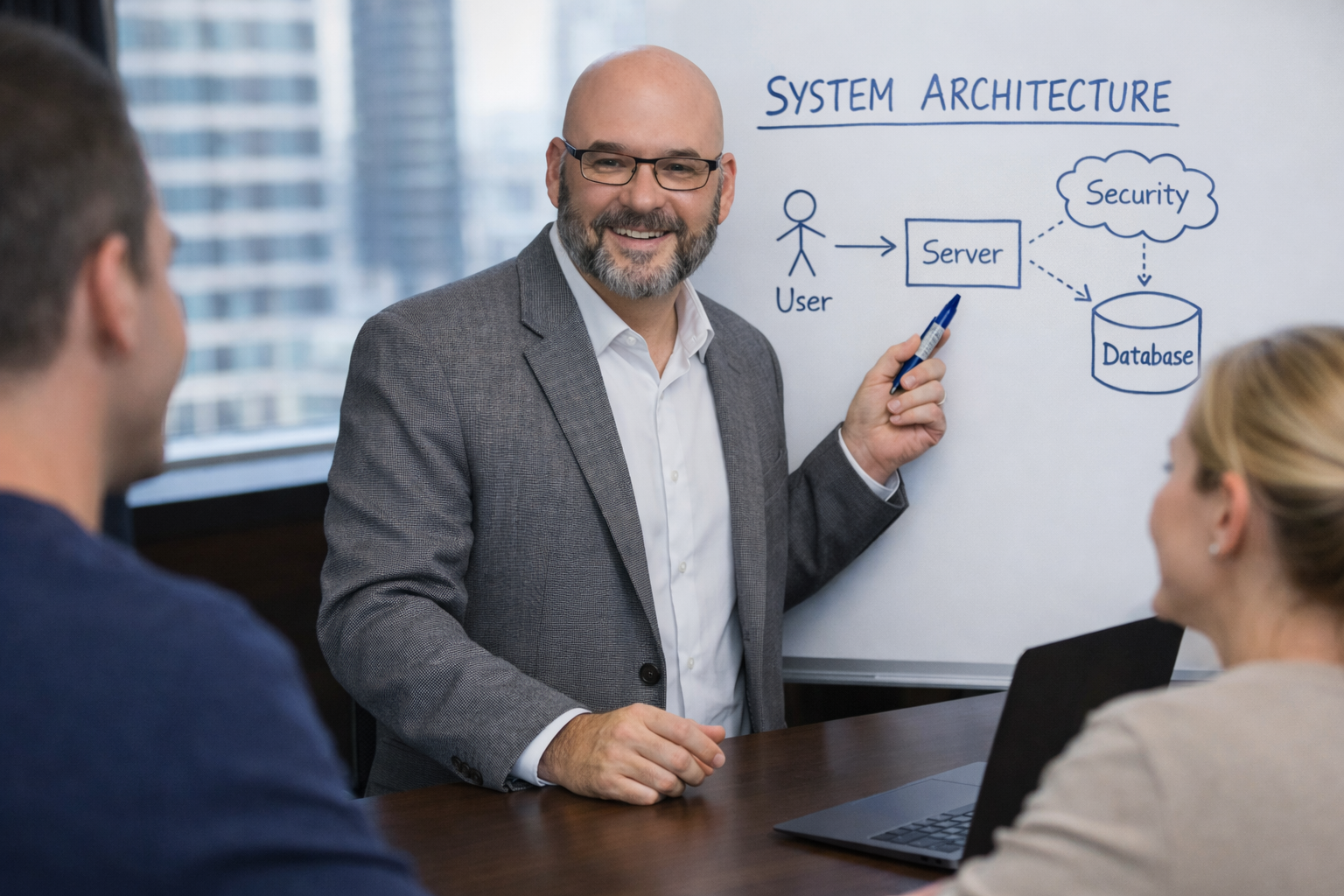
The P.E.Z.A.G.O. Framework helps leaders evaluate AI opportunities, protect sensitive information, strengthen governance, and make informed decisions before adopting or expanding AI-enabled technologies.
P — Prioritize Workflows
Identify the business processes, operational challenges, and use cases where AI may provide meaningful value.
E — Evaluate Data Sensitivity
Determine what information is involved, how sensitive it is, where it is stored, and what privacy, confidentiality, or regulatory requirements apply.
Z — Zone Architecture Design
Define appropriate boundaries for systems, data, users, vendors, and access based on the organization’s risk profile and operational needs.
A — Automate Processes
Evaluate where responsible automation may improve efficiency, consistency, responsiveness, or decision support without weakening human oversight.
G — Govern Access & Usage
Establish accountability, acceptable-use expectations, access controls, employee guidance, vendor oversight, and processes for reporting concerns.
O — Optimize Continuously
Monitor performance, risk, compliance, and business outcomes so governance and controls can evolve as technologies and organizational needs change.
The framework supports an assessment-first, vendor-neutral approach. It helps leadership determine what should move forward, what requires additional safeguards, and what may not be appropriate for the organization at this time.
Cybersecurity
Our Core Pillars of Security
Risk & Protection: Proactive management of the digital and operational risks inherent in today’s AI-driven landscape.
Physical Security Assessment: Professional analysis of your physical workspace to ensure the safety of your people and the privacy of your files.
Advisory: Dedicated partnership providing the clarity and governance needed to lead your organization with confidence.
Security Awareness Programs
Staff Workshops & Executive Briefings
We don’t believe in guesswork. Our methodology is built upon the world’s most rigorous frameworks to ensure your professional practice is both secure and future-ready.
NIST CSF 2.0: We align our security assessments with the latest NIST 2.0 standards to ensure a resilient and defensible digital foundation for your organization.
NIST AI RMF: We apply the NIST AI RMF to assess the safety and security of your AI implementations, directly addressing unique professional risks like privacy, bias, and output reliability.
Policy Review
Policy Development
Let’s Explore If AI Can Safely Improve Your Operations
If you’re considering AI but want to ensure it’s implemented correctly and securely, a short conversation can help clarify what’s possible for your firm.
No pressure—just a practical discussion about your current systems.
Measurable AI Outcomes for Founders & CEOs
Industries Research and AI Adoption Examples
Pezago Advisory LLC is an AI strategy consultancy. These third-party case studies are cited for educational purposes as industry benchmarks and do not imply an endorsement or client relationship between Pezago Advisory and the referenced companies.
Case Study: Accuracy Benchmarks in Contract Data Extraction (2026) The Challenge: Manually extracting key obligations from high volumes of contracts (e.g., a portfolio of 2,000 documents) traditionally takes over 80 hours and is susceptible to a human error rate of 10% to 20% due to reviewer fatigue. The Technology Impact: Current professional-grade legal AI systems have demonstrated the ability to extract complex contract data with a verified accuracy of 98%. The Result: By shifting from manual triage to AI-assisted extraction, firms have successfully mitigated the risk of human oversight while completing months of data analysis in a fraction of the time. Original Source: https://www.thomsonreuters.com/en-us/posts/technology/ai-in-professional-services-report-2026/
Case Study: Global Productivity & Revenue Growth (2026) The Challenge: Legal practices in 2025-2026 are facing increased pressure to deliver more value with less overhead as talent costs rise. The Technology Impact: According to the 2026 Future Ready Lawyer Survey, 92% of legal professionals now use AI in their daily work. Over 62% of those professionals report weekly time savings of up to 20% through the automation of routine document reviews. The Result: These efficiency gains are directly impacting the bottom line; 52% of firms surveyed reported a revenue increase of up to 20% specifically attributed to AI-driven workflow transformation. Original Source: https://www.wolterskluwer.com/en/expert-insights/legal-ai-adoption-time-savings-revenue-growth
Case Study: Mayo Clinic nurses lead the way with AI-powered Nurse Virtual Assistant (2025). The Challenge: Nurses were basically drowning in tabs. Every time they needed to check a patient’s history or look up a specific medical rule, they had to click through a dozen different systems. It was a massive time-sink that kept them staring at computer screens instead of looking at their patients. The Technology Impact: Mayo Clinic built a custom AI tool called the Nurse Virtual Assistant. Think of it like a smart shortcut that lives inside their medical records. Instead of a nurse digging through years of messy notes, the AI reads everything—ER visits, old phone calls, lab results—and gives the nurse a "CliffNotes" version of the patient instantly. It also puts all the medical manuals and rulebooks right at their fingertips so they don't have to go searching for them. The Result: This wasn't just a small pilot program; they rolled it out to nearly 10,000 nurses. The big win here is that it cut out the "detective work" nurses used to do at the start of every shift. Now, they get the info they need in seconds, which lowers their stress and gives them more time to actually be in the room with the people they’re treating. Original Source: https://newsnetwork.mayoclinic.org/discussion/mayo-clinic-nurses-lead-the-way-with-ai-powered-nurse-virtual-assistant/
Disclaimer: Pezago Advisory LLC is an AI strategy consultancy and does not provide legal, medical, or tax advice. These case studies are cited as third-party industry benchmarks for educational purposes and do not imply a client relationship or endorsement by the original authors or organizations mentioned. All AI-driven systems and architectures require consistent human oversight and must undergo final review and validation by licensed legal or medical professionals.
CONFIDENTIAL CONSULTATION
Schedule Your
AI Readiness & Strategy Consultation
Discuss your firm’s constraints, compliance obligations, and capacity challenges in a secure, zero‑pressure conversation. Select a time below to begin your Strategic AI Readiness Assessment.
All consultations are conducted in accordance with rigorous professional and security standards to ensure the protection of your operational integrity and confidential data.
Is Your Firm Ready for What’s Next?
Time to Have the Conversation
Pezago Advisory From our Texas Headquarters to Clients Nationwide
COMPANY
CUSTOMER CARE
FOLLOW US


© 2026 Pezago Advisory LLC. All rights reserved. Consulting is advisory only and not legal or tax advice.